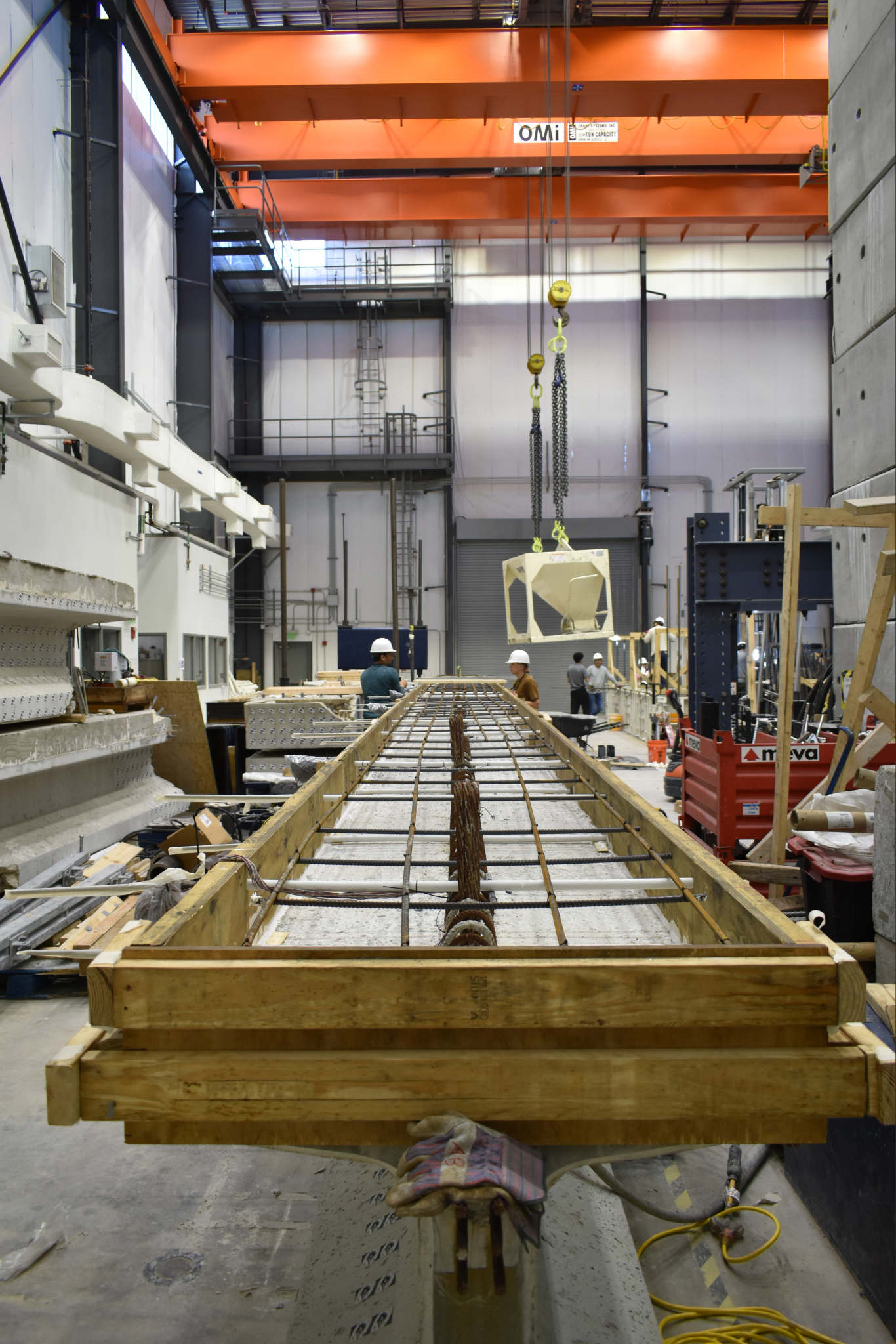
TxDOT Funded Research
Evaluation of 300 ksi Prestressing Strands for Prestressed Concrete Girders
Current AASHTO LRFD and TxDOT design provisions are built around 270 ksi low-relaxation prestressing strands, the industry standard for decades. But 300 ksi strands are already being produced and deployed globally, offering higher prestressing force and ultimate strength that could reduce construction costs and extend achievable span lengths, with the greatest potential on larger sections like the Tx62 and Tx70.
Existing code provisions, developed around 270 ksi strands, have not been validated for the end-region cracking and anchorage behavior associated with higher-strength strands.
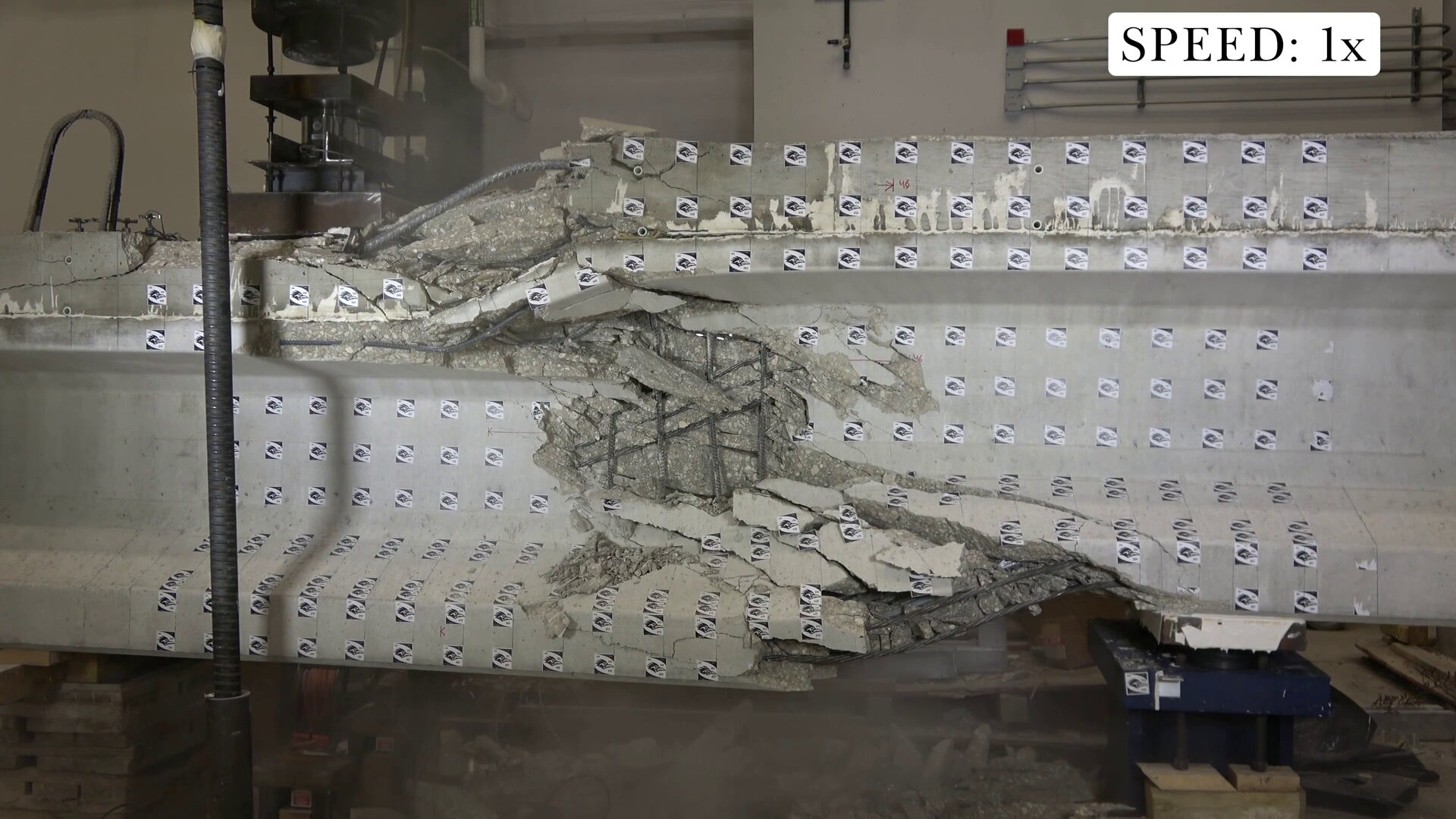
At UT San Antonio, we are testing full-scale TxDOT bridge girders prestressed with 300 ksi strands, pushing them to failure to understand how they actually behave, and whether current design provisions are adequate, conservative, or in need of revision.
Material Properties
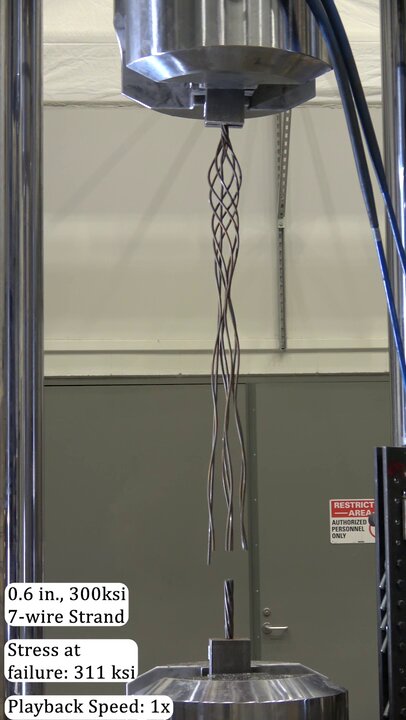
- Developed a sand-filled clamping plate system to successfully grip and test 300 ksi strands, resolving repeated grip failures that had prevented direct tensile testing
- Observed that the 1% extension yield definition in ASTM A416 does not adequately differentiate strength grades when elastic modulus remains unchanged
- Proposing a modified yield strength definition based on 0.1% offset stress, consistent with Eurocode practice, for incorporation into future ASTM A416 provisions
Anchorage of 300 ksi Strands
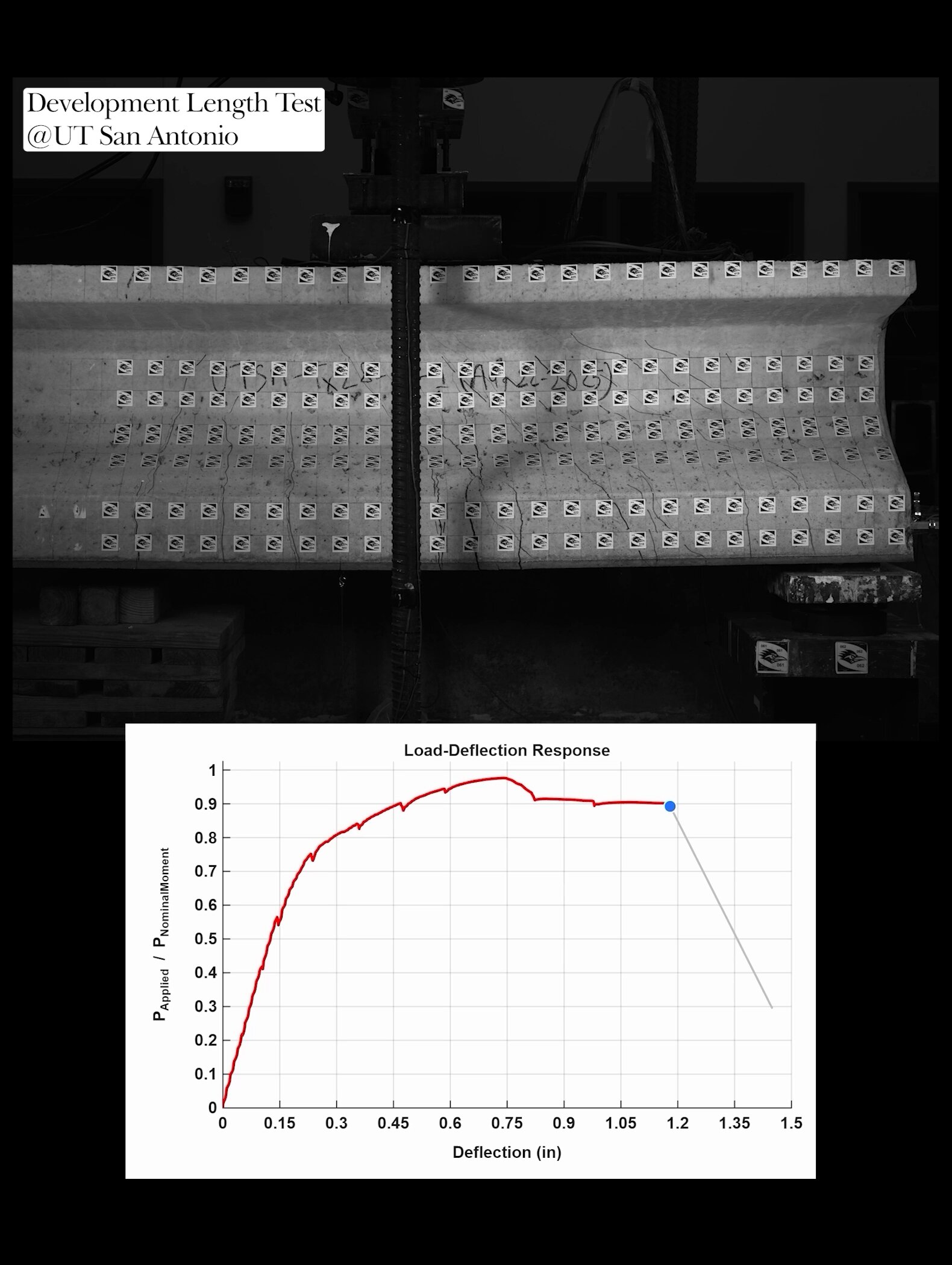
- Transfer and development length provisions in AASHTO LRFD and ACI 318 stem from tests on 250 ksi stress-relieved strands in the 1950s–60s; applicability to 300 ksi low-relaxation strands requires verification
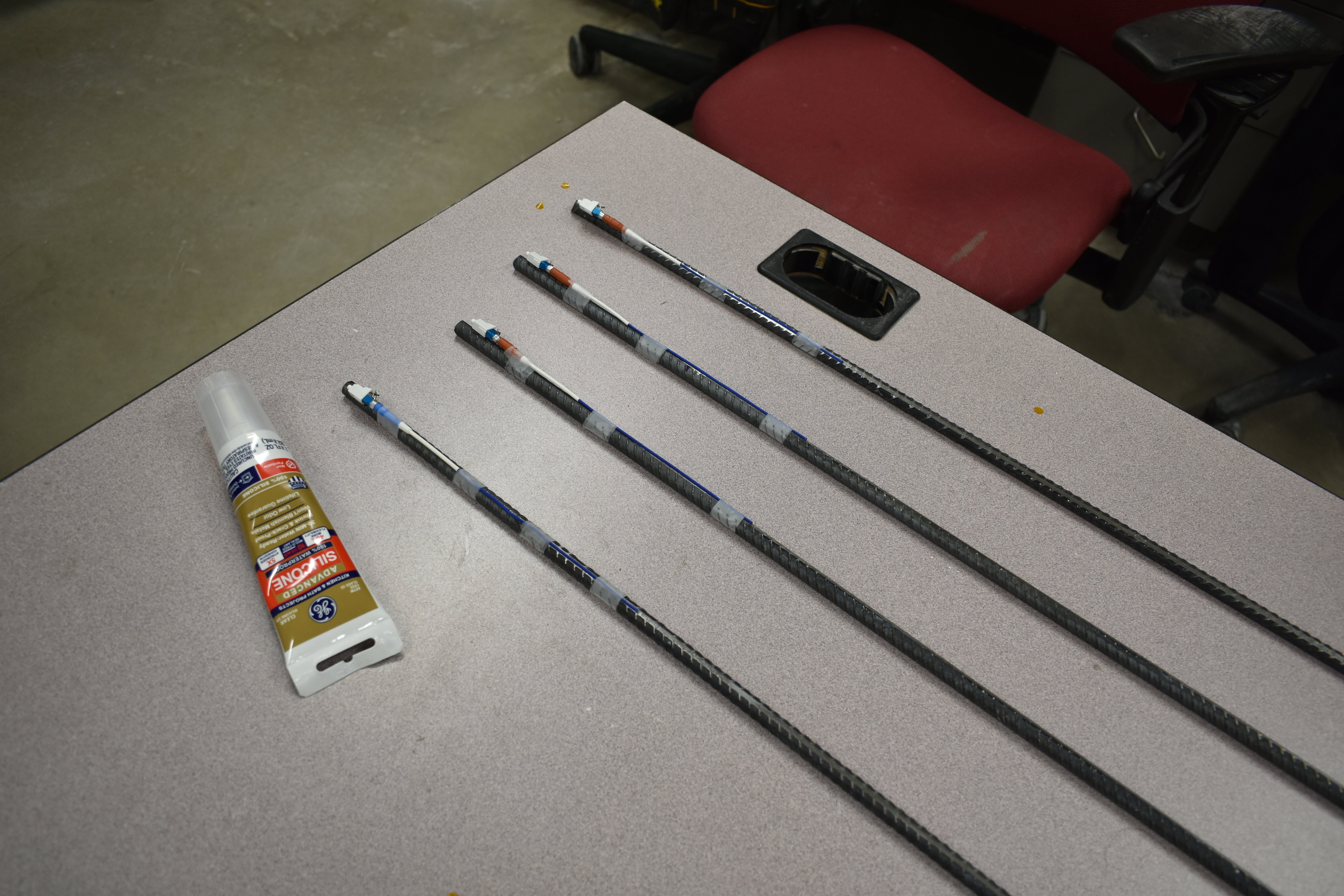
- 8 full-scale girders (Tx28 and Tx46) tested across three concrete strength grades, instrumented with ER strain gauges and embedded Fiber Optic Sensors
- Concrete strength significantly influences transfer length; current provisions were conservative for medium and high strength concrete, confirming a concrete strength parameter is warranted in updated equations
- Passive confinement from end supports can mask insufficient development length if not accounted for in test interpretation
- One medium strength concrete specimen achieved full strand development at 66 in.; conclusions await completion of the full test matrix
- Fiber optic sensors embedded in concrete captured strain evolution over time, offering insight into creep and shrinkage losses and long-term transfer length
End-Region Cracking, and Shear and Flexural Performance
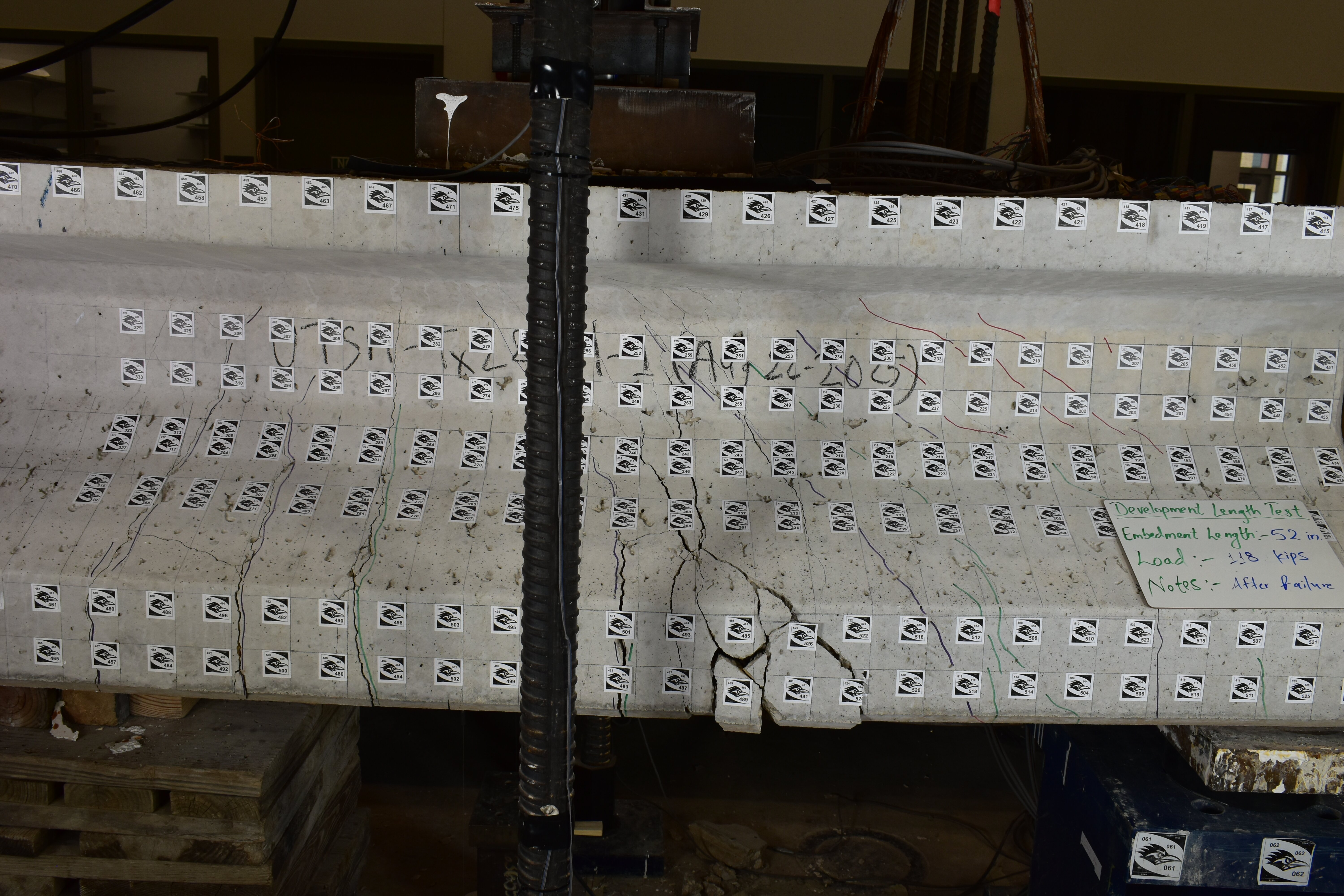
- End-region crack patterns mapped for each girder immediately after prestress release and at subsequent intervals
- Composite deck cast on top of girders prior to load testing
- Full-scale girders tested to failure in shear and flexure at the Large-Scale Structures Laboratory